How to Pyramid a Winning Trade: Let VIV Show You Where Smart Money Adds

Most traders dream of pyramiding — adding to a winning trade and riding a trend to its full potential. Yet for many, pyramiding becomes the fastest way to give back profits. They add too late, too aggressively, or at emotionally charged prices.

Smart money pyramids differently.
They don’t add because price is moving — they add because demand is being revalidated.

This is where VIV footprints change everything.
Pyramiding isn’t about confidence. It’s about evidence — and volume footprints provide that evidence.

Why Most Traders Pyramid the Wrong Way

The common retail pyramiding mistake looks like this:

  • Price moves strongly
  • Trader feels confident
  • Adds more at the top
  • Market pulls back
  • Profits evaporate
Why does this happen? Because retail traders pyramid based on price excitement, not institutional confirmation. Smart money never adds at emotional highs. They add when the market proves them right again.

The Smart Money Logic Behind Pyramiding

Institutions pyramid only when three things happen:

  1. Initial Position Is in Profit
    No averaging losers. Ever.
  2. Market Pauses and Refreshes
    Trends don’t go vertical forever. Institutions wait for pauses.
  3. Demand Reappears at a Proven Zone
    This is the key: they add when previous demand zones are defended again.
That defense is visible through volume footprints.

What Makes a Safe Pyramiding Zone?

A safe pyramiding zone is not:

  • A random pullback
  • A moving average touch alone
  • A candle pattern without context
A safe pyramiding zone is where:
  • Smart money already participated
  • Price moved away cleanly
  • Price returns
  • And demand shows up again
This is where VIV footprints become priceless.

How VIV Footprints Guide Pyramiding

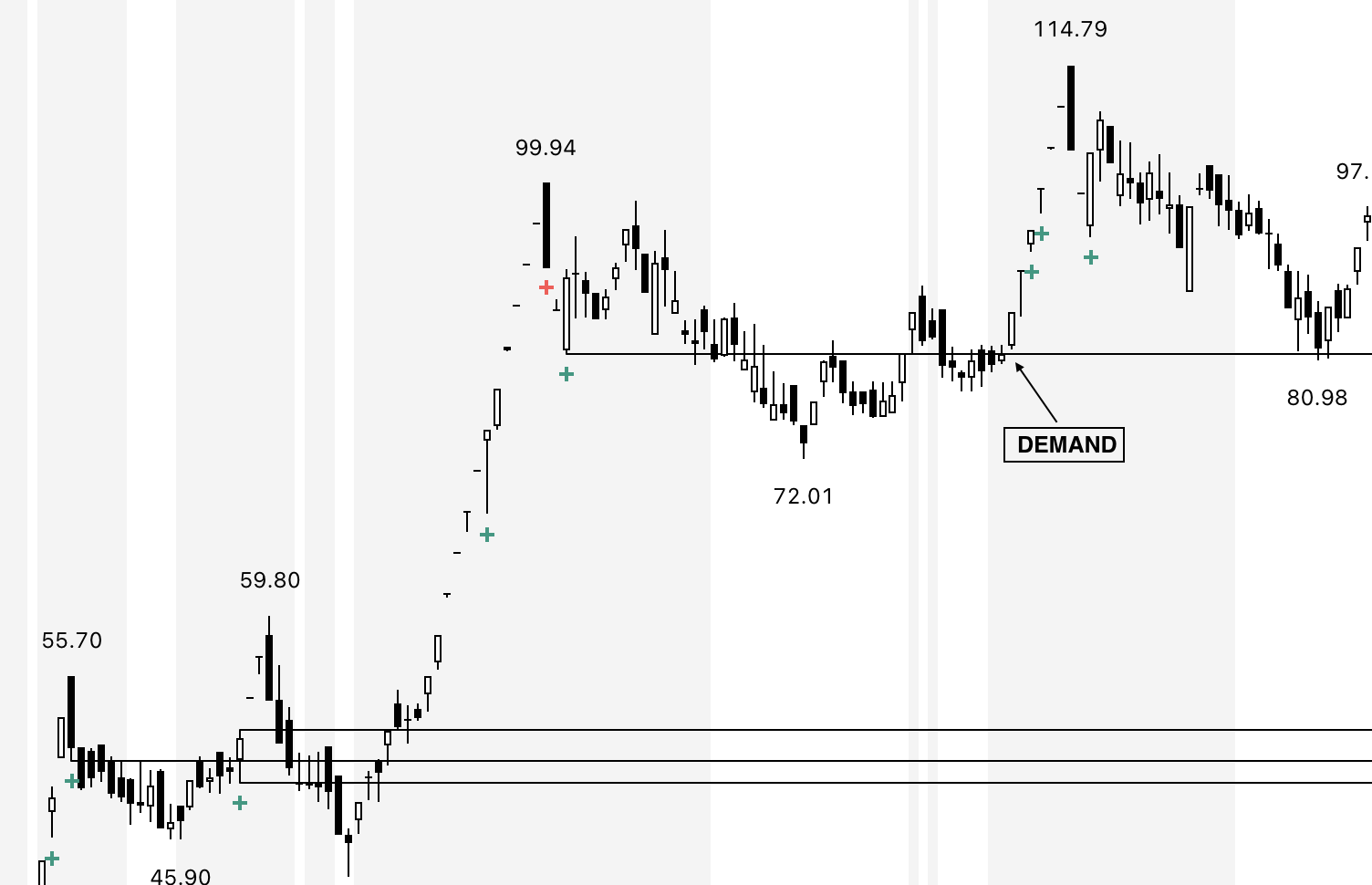
VIV highlights important volume footprints — candles where institutions showed clear interest. Each footprint creates a zone, not just a candle. When price revisits that zone, one of two things happens:

  • Smart money defends → continuation
  • Smart money disappears → caution
Pyramiding should happen only in the first scenario.

Step-by-Step: How to Pyramid a Winning Trade Using VIV

Step 1: Enter the Initial Trade at a Footprint Zone
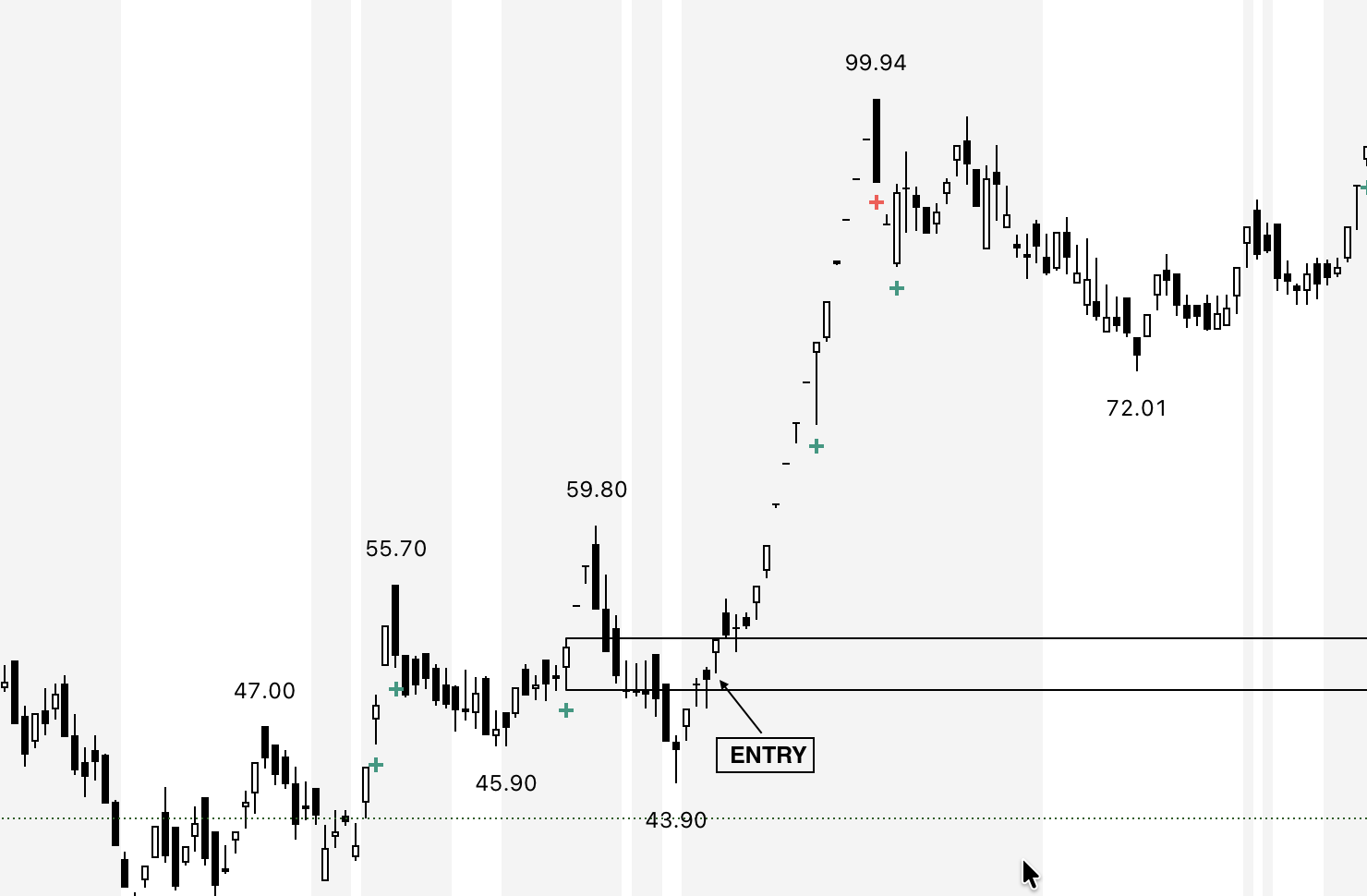
Your first entry should already be aligned with:
  • Trend direction
  • Market structure
  • A VIV footprint zone
This ensures your base position is built where institutions are active.
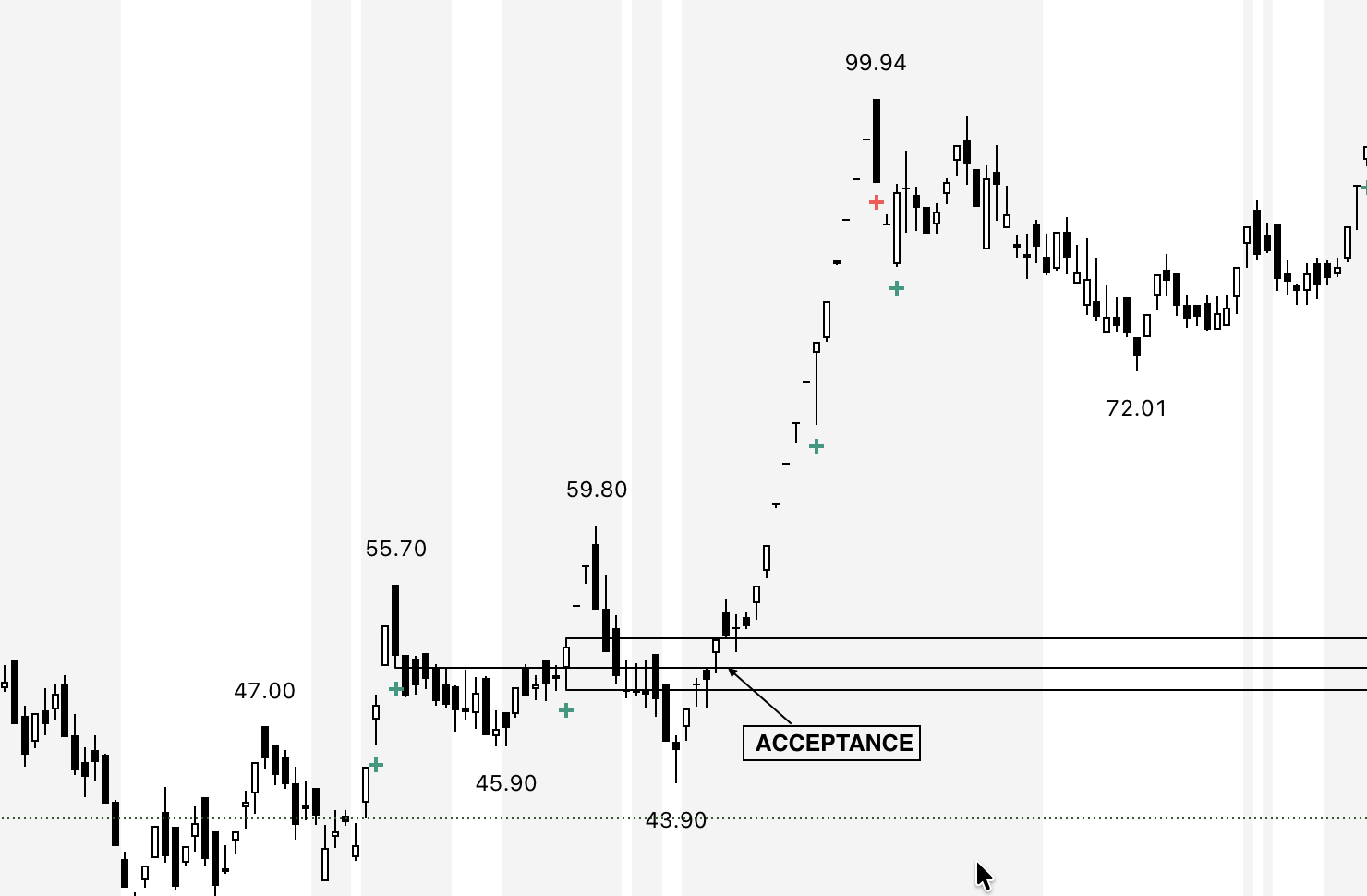
Step 2: Let Price Move Away Never pyramid immediately. Let price:
  • Break structure
  • Move away from the footprint
  • Show acceptance
This confirms the trade is working.
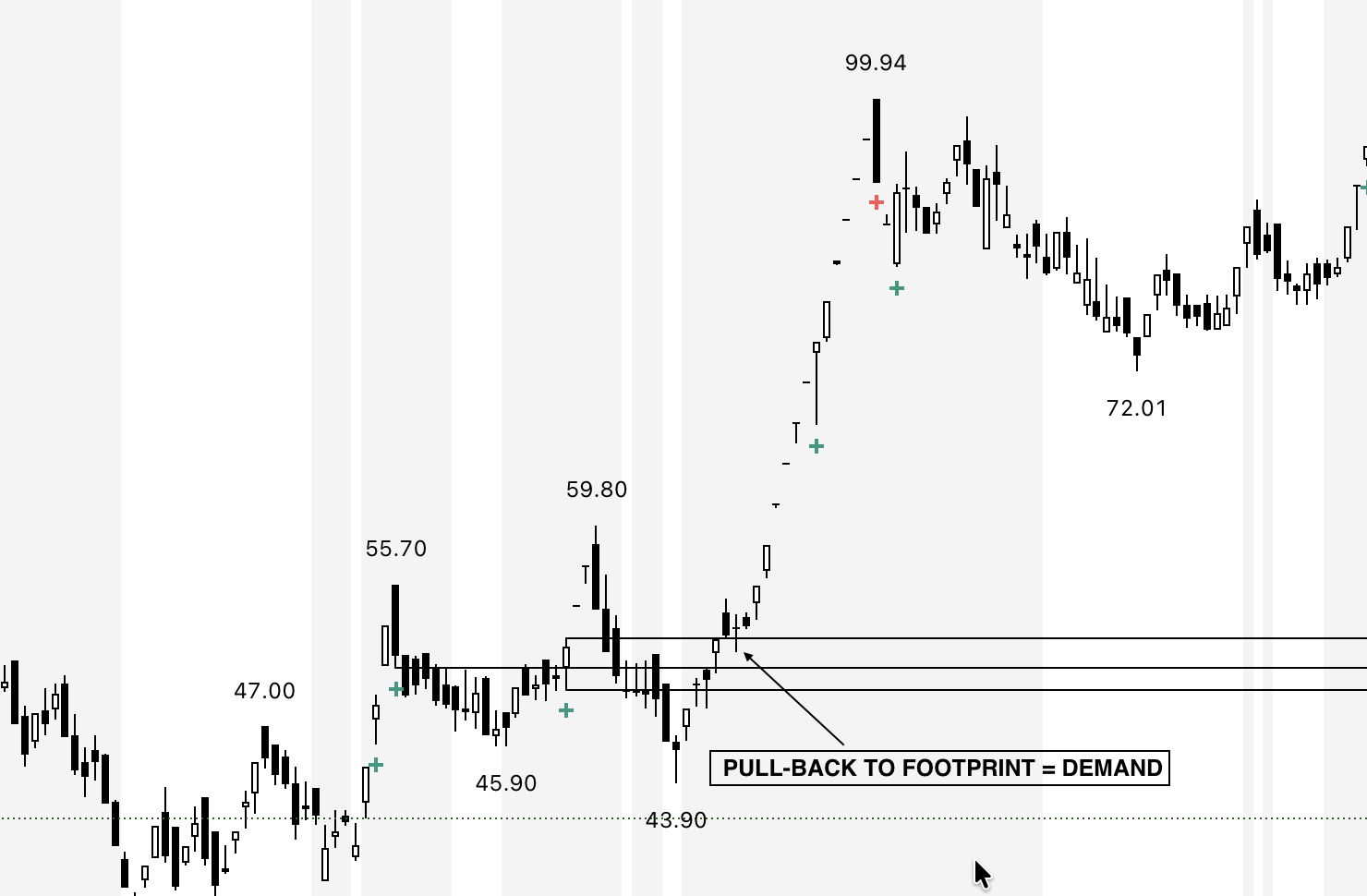
Step 3: Wait for a Pullback to a Footprint
Now comes the critical part. Price will often pull back to:
  • The same footprint zone, or
  • A new footprint created during the move
This pullback is not weakness — it’s liquidity recycling.
Step 4: Watch the Footprint Reaction
This is where VIV does the heavy lifting. You are looking for:
  • Price holding inside the footprint zone
  • Volume supporting the level
No aggressive breakdown
If the footprint is defended, smart money is saying:
“We are not done yet.”
That’s your pyramiding signal.
Step 5: Add Smaller, Smarter
Never add the same size as the initial trade. A professional pyramiding structure looks like:
  • First entry: full planned risk
  • Second entry: smaller size
  • Third entry (if any): even smaller
Your average price improves, while risk stays controlled.

What VIV Protects You From

Using VIV for pyramiding helps you avoid:
❌  Adding at exhaustion
❌  Adding during distribution
❌  Adding without demand confirmation
❌  Turning a winner into a loser Instead, you add only when the market proves you right again.

A Realistic Example (Conceptual)

  • Stock breaks out from ₹500 on a VIV footprint
  • Moves to ₹540
  • Pulls back to ₹520
  • VIV footprint zone holds
Volume supports the level
This is not a reason to panic.
This is the safest place to add, not the breakout high. Retail adds at ₹540.
Smart money adds at ₹520.
Guess who survives volatility?

When NOT to Pyramid (Very Important)

Do not pyramid if:

  • Footprint zones fail
  • Volume dries up on pullbacks
  • Price slices through previous demand
  • Market breadth weakens aggressively
Pyramiding is a privilege — not a right. The market must invite you to add.

The Psychology of Correct Pyramiding

Pyramiding feels uncomfortable when done right.

You add when:

  • Price is pulling back
  • Fear replaces excitement
  • Social media goes quiet
That discomfort is a feature, not a bug. Smart money pyramids when confidence is earned, not assumed.

Conclusion

Pyramiding is not about aggression — it’s about alignment. When done emotionally, it destroys good trades. When done with structure and volume footprints, it compounds winners intelligently.

VIV doesn’t tell you to add.

It shows you when the market allows you to add safely. If you learn to pyramid using footprint defense, you stop chasing trends — you grow with them.

Strong trends reward patience, structure, and intelligent pyramiding — VIV simply helps you see where smart money is adding.

X

By Sunil Sethi
Trading markets since 2016 | Swing & Positional trader | Price Action | Reversals
Building clarity in the chaos of charts — blending tech leadership with market mastery.

VIP - VERY IMPORTANT PERSON
VIV - VERY
IMPORTANT VOLUME
⇢ BE A VIP WITH VIV

How smart money pyramids → Try VIV